

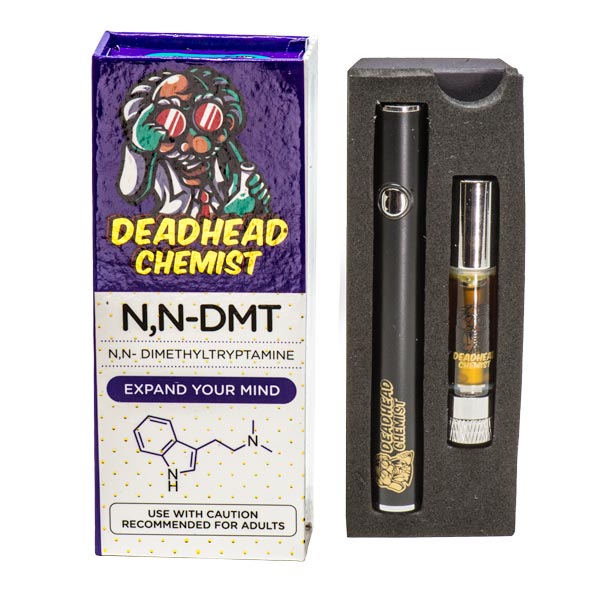
DMT (Cartridge and Battery) 1mL Deadhead Chemist
$230.00
DMT (Cartridge and Battery) 1mL Deadhead Chemist
Deadhead Chemist DMT is the active ingredient in ayahuasca, a traditional South American brewed tea and is used for its psychoactive, hallucinogenic effects. “Spiritual insight” is one of the most commonly reported positive side effects of the drug.
1mL
800mg DMT
Spirit molecule psychedelic experience
Vape, cartridge and battery included
60-70 puffs
Take a big hit, hold it in for 10 seconds and then exhale.
If you’ve never believed you can breakthrough on dmt carts, try these!
DMT Overview – Educational Summary of Dimethyltryptamine
Introduction to DMT
DMT Deadhead Chemist. Dimethyltryptamine (commonly abbreviated as DMT) is a naturally occurring psychedelic
compound that has been studied within the fields of neurochemistry, ethnobotany, and consciousness research. It belongs to the
tryptamine family of compounds, which are structurally related to the neurotransmitter serotonin.
DMT has been identified in numerous plant species and has also been detected in trace amounts in certain mammals,
including humans, although its biological role in the human body remains an area of ongoing scientific investigation.
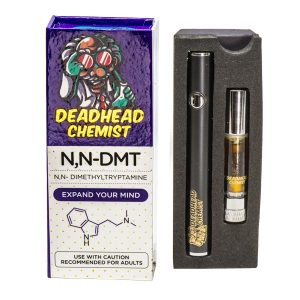
DMT Deadhead Chemist
Historical and Cultural Context
DMT is perhaps most widely known for its historical and cultural association with traditional Amazonian preparations
such as ayahuasca. In these contexts, indigenous communities have used plant-based brews containing
DMT for ceremonial and spiritual purposes for generations. Anthropologists and ethnobotanists have documented
these practices extensively, highlighting their cultural significance and structured ceremonial use.
Modern scientific interest in DMT has grown over the past several decades, particularly within the broader study of
psychedelic compounds and their effects on perception, cognition, and subjective experience.
Researchers often examine both the historical context and the neurochemical mechanisms when studying this compound.
DMT Deadhead Chemist
Pharmacology and Mechanism of Action
From a pharmacological standpoint, DMT interacts primarily with serotonin receptors in the brain, especially the 5-HT2A receptor subtype. This receptor system is also involved in the activity of other classic psychedelic compounds. Scientists studying DMT frequently focus on how it influences neural signaling, sensory processing, and altered states of consciousness.
Because of its rapid onset and relatively short duration compared to some other psychedelics, DMT has attracted interest in controlled research environments. Its fast pharmacokinetic profile makes it distinct within the broader psychedelic category and useful for certain types of laboratory studies.
DMT Deadhead Chemist
Scientific Research and Observations
Scientific literature frequently describes DMT as producing intense and highly immersive perceptual changes under studied conditions. However, responses can vary significantly depending on numerous factors, including individual physiology, psychological state, environment, and dosage in controlled research settings.
Researchers consistently emphasize that studies involving compounds like DMT must be conducted under strict clinical and regulatory protocols.
DMT Deadhead Chemist
Legal and Regulatory Considerations
It is important to note that the legal status of DMT varies widely by country and jurisdiction.
Anyone seeking information about DMT should consult applicable regulations in their area and rely on reputable scientific and legal sources. Regulatory status can change, and compliance with local laws is essential.
DMT Deadhead Chemist
Ongoing Areas of Study
Current academic interest in DMT is largely centered on neuroscience research, consciousness studies, and the broader investigation of psychedelic-assisted therapies.
Universities and medical research centers continue to study DMT within approved research frameworks, contributing to a growing but still developing body of scientific knowledge.
DMT Deadhead Chemist
Summary
In summary, DMT is a naturally occurring psychedelic tryptamine that has played roles in both traditional cultural practices and modern scientific research. Its interaction with serotonin systems and its distinctive psychoactive profile have made it a subject of continued academic interest.
As with any controlled or psychoactive substance, accurate information, legal awareness, and reliance on credible research sources are essential for informed understanding.
Be the first to review “DMT (Cartridge and Battery) 1mL Deadhead Chemist”
Related products


5-MeO-DMT for sale

5-MeO-DMT for sale
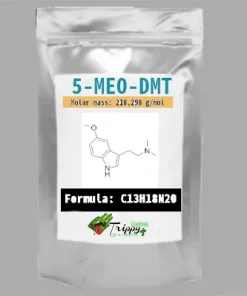
5-MeO-DMT for sale

5-MeO-DMT for sale


Chocolate bars


Chocolate bars

5-MeO-DMT for sale
Reviews
There are no reviews yet.